History of Medicine
First of all the doctor should look at the patient’s face. If he looks his usual self this is a good sign - Hippocrates 430BC
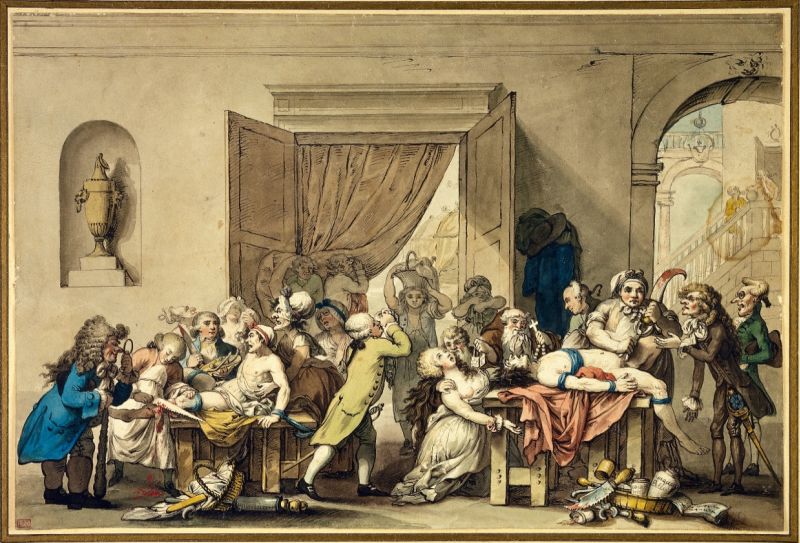
image by: Wellcome Images
HWN Recommends
President’s Page: Medical history: a valuable tool to help us frame the present and predict the future
Many prominent physicians have promoted medical history as a tool to better understand diseases and to help frame the present and speculate on the future. William Osler, the English-speaking world’s leading physician a century ago, put it this way: “By the historical method alone can many problems in medicine be approached profitably.”
Paul Dudley White, America’s first academic cardiologist, also thought medical history was important. By looking back, he wrote in 1950, “we acquire a better perspective of our own place in history with the humbling realization of our role as merely a link in the long chain of the acquisition and application of medical knowledge.”
Two hundred…
Resources
 A dose of history
Medicine has changed a lot over the past 1,000 years. But it has also stayed the same a lot.
A Museum of Medical Mistakes
The Historical Medical Library of The College of Physicians of Philadelphia, newly open to the public, catalogs human error through over 375,000 rare books, journals, historical documents and incunabula.
Taking Lessons From a Bloody Masterpiece
These last two months I’ve grown obsessed with one American painting: a bloody masterpiece of pain and healing, made in Philadelphia nearly a century and a half ago. Thomas Eakins (1844-1916) was still a young artist when he completed “The Gross Clinic,” an in-action, up-to-the-minute depiction of the vanguard of American medicine that feels particularly relevant right now.
Awesomely Gross Medical Illustrations From the 19th Century
In the 19th century, doctors couldn’t use photographs to teach their students to distinguish between benign or cancerous growths. Or how teeth looked in patients affected by hereditary syphilis. Or the stages of cholera. So the physicians, surgeons, and anatomists of the 1800s built close relationships with artists, craftsmen, and publishers to produce beautiful (yet horrifically off-putting at times) illustrations.
Contagion: Historical Views of Diseases and Epidemics
Contagion: Historical Views of Diseases and Epidemics is a digital library collection that brings a unique set of resources from Harvard’s libraries to Internet users everywhere. Offering valuable insights to students of the history of medicine and to researchers seeking an historical context for current epidemiology, the collection contributes to the understanding of the global, social—history...
Controversies and medicine
We usually imagine medical science and doctors never doing anything except making revolutionary discoveries and saving lives. Is this realistic or a rose-tinted view? History shows medicine and doctors can ‘go bad’ spectacularly. Some medical controversies were accidents, but many have resulted from deliberate actions. Sometimes doctors believed the greater good (as they saw it) was more important than ethical behaviour. Many of these incidents were not problematic at the time, and only became controversial when society’s values and opinions changed.
Egyptian Medicine
Medical practice in ancient Egypt was so advanced that many of their observations, policies, and commonplace procedures would not be surpassed in the west for centuries after the fall of Rome and their practices would inform both Greek and Roman medicine.
Fighting New Diseases by Giving Them Blander Labels
Old habits of identifying diseases should be forsworn, the health organization urges. No longer should disease names refer to specific doctors (as in Hansen’s disease, Whipple’s disease, Bell’s palsy) or specific patients (like the members of the American Legion who fell victim to that first giant outbreak of Legionnaire’s disease in 1976).
Historical Events That Created Our Current Health and Nutritional Quagmire
Top Ten Nutritional Myths, Distortions, and Lies That Will Destroy Your Heath.
History, or Just Horror?
Should archives make images of eradicated diseases and antiquated treatments available for the world to see?
The Real Medical History Behind PBS' Civil War Drama 'Mercy Street'
Throughout history, war has often helped advance certain medical practices, spur scientific innovation and spark research interest into specific conditions or diseases. Mercy Street gives a rare glimpse into that aspect of the Civil War, with its often harrowing depictions of both established and experimental medical treatments provided to wounded soldiers at the time.
What killed Cromwell? Or Mozart? Sleuthing doctors take on the 'ultimate whodunit'
The patient was dead, but the cause remained a mystery. And if there's anything doctors hate more than their inability to forestall death, it's their inability to explain it.
When Disease Names Honor the Infamous
The field of medicine is littered with eponyms that celebrate physicians who first described syndromes, signs, surgical procedures and anatomic structures. Though we use these eponyms every day, we rarely take the time to consider the lives of the people behind the names.
Why Are You Not Dead Yet?
Life expectancy doubled in the past 150 years. Here’s why.
President’s Page: Medical history: a valuable tool to help us frame the present and predict the future
When you enter the world of medical history, you have embarked on an interesting journey through time. I think you will enjoy the trip and the broader perspective it provides.
7 surprising facts about the history of medicine
How did people in the past treat illness, injury and disease? What medicines did they use? Here, Caroline Rance shares seven facts from medicine’s long and often shocking history – from the first general anaesthetic to early caesareans and medicinal leeches…
A History of Medicine
Chris Trueman BA (Hons), MA set up www.historylearningsite.co.uk in 2000 as he felt there was no easily accessible and comprehensive website on World History on the web. The site has grown in popularity and is now viewed by hundreds of thousands of people each month from around the world.
Bad Medicine
Welcome to badmedicine.co.uk, the website associated with a new book by Professor David Wootton, published in June 2006 by Oxford University Press and in paperback from November 2007. The author writes of medical practices that, in some ways, survived unscathed from Hippocrates through to the 19th century. A good example was bloodletting.
Brought to Life
Welcome to the Science Museum's History of Medicine website, the ultimate resource for educators and students. With thousands of interesting and intriguing objects you're bound to find something to excite, entertain and educate.
Bulletin of the History of Medicine
The leading journal in its field for more than three quarters of a century, the Bulletin is the official publication of the American Association for the History of Medicine and the Johns Hopkins Institute of the History of Medicine. Each issue spans the social, cultural, and scientific aspects of the history of medicine worldwide and includes reviews of recent books on medical history.
Center for the History of Medicine
The Center for the History of Medicine continues to work hard at making its collections and exhibits available online in OnView, scanning hundreds of items from the Center’s rich collection to recreate the full visual experience of physical exhibits.
Centre for Medical History
The Centre for Medical History was established in 1997 to enhance the University's reputation for research within the field of medical history, and for the social study of contemporary medical and health-related activities.
History of Medicine Collections
The Duke University History of Medicine Collections acquire, preserve, interpret, and make available for research and instruction, materials documenting the history of medicine, biomedical science, health and disease in the global context of the Western medical tradition
History of Medicine On-Line
Context. Perspective. The media, writers, technologists, and every facet of modern medicine bandy about these words. Yet, context and perspective is exactly what the new History of Medicine section is all about. Through the pages of History of Medicine On-Line the history of medicine will be told such that it provides context and perspective on the current and future state of medicine.
Medicine and Madison Avenue
This website explores the complex relationships between modern medicine and modern advertising, or "Madison Avenue," as the latter is colloquially termed. The Medicine and Madison Avenue Project presents images and database information for approximately 600 health-related advertisements printed in newspapers and magazines.
Social History of Medicine
Social History of Medicine is concerned with all aspects of health, illness, and medical treatment in the past. It is committed to publishing work on the social history of medicine from a variety of disciplines.
Wellcome Library
We are one of the world's major resources for the study of medical history. We also offer a growing collection of material relating to contemporary medicine and biomedical science in society.
American Association for the History of Medicine
The American Association for the History of Medicine (AAHM), founded in 1925, is a professional association of historians, physicians, nurses, archivists, curators, librarians, and others. The AAHM promotes and encourages research, study, writing, and interest in the history of medicine and allied fields.
American Association for the History of Nursing
The American Association for the History of Nursing (AAHN) is a professional organization open to everyone interested in the history of nursing. Originally founded in 1978 as a historical methodology group, the association was briefly named the International History of Nursing Society.
Australian Medical Pioneers Index
Welcome to the Australian Medical Pioneers Index (AMPI), a database of over 3,000 pioneer doctors, from the 1700s through to 1875. The site covers Australian medical history, with a database of medical pioneers and educational background material.
British Society for the History of ENT
The origins of the British Society for the History of ENT can be dated back to 1981, when the first meeting of the British section of the European Society for the Study of History of Otorhinolaryngology was held at the Birmingham and Midland Ear, Nose and Throat Hospital. Full membership of the society is extended to all ear, nose and throat consultants and trainees, as well as other members of the medical profession with an interest in the history of otolaryngology.
British Society for the History of Radiology
This organisation was formed in January 2006, replacing the Radiology History and Heritage Charitable Trust. We hope to put different historical articles and items of interest on the site each month. We will also look at items and articles you wish to send in with a view to either publishing them in our journal or posting them on the site.
Journal of Infectious Diseases & Preventive Medicine
Formerly Known as Journal of Ancient Diseases & Preventive Remedies. Diseases are re-emerging and resurging in nature. Any infection, be it bacterial, viral or any other type has historical evidence of re-emergence once in a while. Awareness about the disease cases of ancient times and their detail information is important to combat any sudden future emergency situation caused by any lately re-emerging pathogen. Infectious remedies answered several important medical conditions which we are not able to even today.
Medical Museums Association
The Medical Museums Association was created to promote longterm contacts among individuals, institutions, and organizations involved in collecting historical artifacts and objects of interest to the health sciences.
Museo Galileo
The Museo Galileo is one of the foremost international institutions in the History of Science, combining a noted museum of scientific instruments and an institute dedicated to the research, documentation and dissemination of the history of science in the broadest senses.
National Library of Medicine
The National Library of Medicine houses one of the world's largest history of medicine collections. We collect, preserve, and make available to researchers and the public, print and non-print materials that document the history of medicine, health, and disease in all time periods and cultures.
Health Sciences Library System
History of Medicine includes more than 10,000 secondary sources in the historical aspects of health professions, medical education and research, military medicine and ethics, diseases, development of drugs and therapies, hospital care, epidemiology, substance abuse, and medical care and policy.
Medical History
An International Journal for the History of Medicine and Related Sciences.

Introducing Stitches!
Your Path to Meaningful Connections in the World of Health and Medicine
Connect, Collaborate, and Engage!
Coming Soon - Stitches, the innovative chat app from the creators of HWN. Join meaningful conversations on health and medical topics. Share text, images, and videos seamlessly. Connect directly within HWN's topic pages and articles.