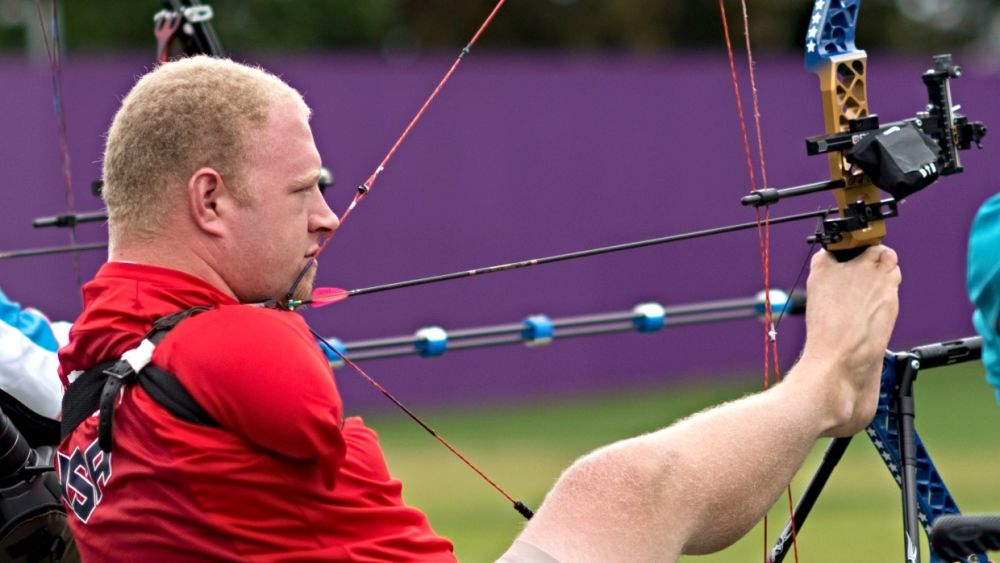
Amputees
People presume my disability has to do with being an amputee, but that's not the case; our insecurities are our disabilities, and I struggle with those as does everyone - Aimee Mullins

image by: HWN
HWN Suggests
Reflections On Life Post-Amputation
I became an amputee in 2005. “Fulfilled life” wasn’t a phrase I was reaching for back then. I was looking for function, for stability, for a way to move through the world again without constantly negotiating pain, limits, and uncertainty. And yet, over the years, the idea of a rewarding, a fulfilled, and adventurous life moved centre-stage again. During these initial years, I’ve learned that fulfillment after amputation is rarely a single breakthrough moment. It’s built through a thousand small decisions, adaptations, relationships, and opportunities — some of them available, some of them denied, and many of them shaped by sheer luck.
Featured
 Designing Medical Devices for the Poorest Four Billion
Our innovations are medical technologies that close the quality healthcare gap for underserved populations. There are more than 4 billion people in the world living in poverty. In many cases they don’t have access to clean water, to health products, to all sorts of basic items that can improve their lives. And with good products, they can be more productive; their children can go to school; they can better take care of their families and have jobs outside their home.
Growth of AI in Amputee Care Deemed “Inevitable”
Healthcare clinicians are already using artificial intelligence to guide decisions related to limb loss. AI is being integrated into prosthesis alignment, socket fabrication, exercise management, gait monitoring, and beyond. For better or worse, it’s also playing a role in insurance approvals, denials, and appeals.
Articles of Interest
The Amputee Who Created New York City
Unfortunately, some of Stuyvesant’s critics have themselves allowed prejudice to cloud their perceptions, by suggesting that his imperious nature was partly caused by the physical and psychic pain he suffered as an amputee. (He lost his right leg below the knee in a 1645 battle.) That’s a classic ableist trope, casting disability as a monstrous distortion of humanity. And it’s demonstrably untrue in Stuyvesant’s case.
Worthy Causes: Range of Motion Project
There are so many nonprofits doing good work on behalf of amputees that it seems impossible to keep track of them all. But we’re going to try anyway. Every week we’ll highlight one organization or person that’s out there trying to make life better for amputees.
An Upper-Limb Amputee Navigates the World of Accessibility
Despite the huge range of ability and disability we amputees represent, standard accessibility accommodations that work for all of us do not exist. But I’m good at adapting, so I’ve put together my own guidelines and approaches to accessibility for my life with an upper-limb amputation.
Boston Marathon Amputees Face New Reality
As people injured by the Boston bombings recover, many who lost one or more limbs face a long and grueling road ahead.
Can This Early-Warning Sign Save Limbs?
The dicloxacillin finding doesn’t stand alone. Opioid prescriptions are also strongly associated with later amputation across all three time windows, as is regular use of over-the-counter pain killers such as acetaminophen (ie, Tylenol). The researchers read these findings as signals of significant underlying pain—the kind associated with poor circulation and chronic wounds.
Eight New Ways AI Is Shaping the Future of Amputee Care
Some would argue that artificial intelligence has been improving amputees’ lives since the 1960s, with the introduction of pattern recognition in myoelectric arms. At the very latest, AI-driven prosthetic technology has been around since the 1990s, when the C-Leg debuted. And almost all would agree that there’s enormous potential for future growth in this realm...
Exoskeletons are Coming, Even Walking to Town
Paraplegics walking again is not as far-fetched as you think!
How Many US Amputees Are There? More Than You Think.
This long-overdue study is the first serious attempt since the George W. Bush administration to gauge how many Americans are living with limb loss/difference. It’s a huge step forward in building the data infrastructure necessary to achieve more affordable, effective, and equitable amputee care. “It gives health systems the data they need to invest in the services that would optimize outcomes for people living with limb loss and limb difference,” says Shelby Harrington, the study’s co-author and Avalere’s managing director of evidence and strategy. “Having the numbers really shows that there is a big enough population to justify that investment.”
In Support of Limb Loss Awareness Month
My experience with the amputee community goes back to my childhood. My best friend’s older brother had cancer, and his leg was amputated when he was a teenager. When he came home from the hospital after his surgery, I was frightened to see him.
Medicare’s Proposed Changes on Prosthetics Stirs a Fight
Amputees say tighter requirements could curb access to artificial lower limbs.
Resources
14 People Who Lost Limbs But Not Their Sense Of Humor
For those of us who have never lost a limb, it’s impossible to really understand the type of physical and emotional trauma it might inflict on a person. Those affected include soldiers, law enforcement, athletes, and everyday people who experienced some sort of disease or accident. There’s no doubt that these are strong people. But what makes these people the strongest is perhaps not just their ability to adapt to misfortune, but also their ability to maintain a sense of humor about it all.
Amplitude
Today’s amputees are living more dynamic lives than ever before. Amplitude tells their stories.
ROMP
ROMP operates fully-integrated prosthetics clinics in Guatemala and Ecuador, using 95% recycled components. We accompany our most vulnerable patients through mobile and community-based rehabilitation. ROMP was founded in 2005 by David Krupa, Eric Neufeld, and Josh Kaplan. Since then we have built permanent systems in Guatemala and Ecuador, and we are now sharing our model worldwide.
Amputation Foundation
Our charity provides a community of support, empowerment, and resources to help individuals confidently adapt to life after limb loss.
Amputee Coalition
To reach out to and empower people affected by limb loss to achieve their full potential through education, support and advocacy, and to promote limb loss prevention.
Amputees Helping Amputees
A social support group for Amputees and their family and or friends,created to allow people to meet and * Ask Questions* Offer helpful Tips* encourage each other.
Limb Preservation Foundation
The Limb Preservation Foundation provides support and community for those experiencing life- and limb-threatening conditions.
Limbs for Life Foundation
Limbs for Life Foundation is a global nonprofit organization dedicated to providing fully-functional prosthetic care for individuals who cannot otherwise afford it and raising awareness of the challenges facing amputees.
The Active Amputee
I am Bjoern Eser, the founder of and the shaker and maker behind The Active Amputee. I am a father of three amazing children, a husband to an equally amazing wife, a thankful cancer survivor, an outdoor enthusiast, a passionate development practitioner and a very active above-the-knee amputee.
The War Amps
A philosophy of “amputees helping amputees” has been the hallmark of The War Amps since 1918, when the organization was founded by amputee war veterans returning home from the First World War. Peer support, self-help and practical assistance are common threads that have been retained in the modern-day organization that developed from their efforts.