Melanoma
There’s a lot to be said for sunshine – both good and bad - H. Peter Soyer
.jpg "Melanoma")
image by: Maurits Verbiest
HWN Suggests
Knowing Your Skin Can Save Your Life
Most people’s conception of melanoma—the deadliest form of skin cancer—is the kind of thing that might be documented on a TV show with a title like Moles Gone Bad. And to be sure, any existing mole that changes shape or color should be checked out by a dermatologist, but quick.
But an August 2017 review of 38 studies by a team at the University of Modena and Reggio Emilia found a surprising pattern: of over 20,000 documented melanomas, less than 30 percent of arose from existing moles. The implication is that, as important as it is to monitor changes to your existing moles, it’s no less important to recognize the appearance of new moles. (Technically, a melanoma is not…
Featured
 An mRNA Melanoma Vaccine Shows Promise
The cancer vaccine relies on the same mRNA technology behind the COVID-19 vaccine, a molecular plug-and-play platform that makes it possible to swap out genetic information coding for different proteins that can be created relatively quickly. Each of the treated patients received a custom-made vaccine, which took six to eight weeks to develop, that was tailored to the specific mutations in their tumor.
How to Check Yourself for the Deadliest Kind of Skin Cancer
In 1998, French dermatologist Jean-Jacques Grob proposed a new system to identify melanomas that slip past the ABCDEs. Grob observed that people typically produce moles that look similar to each other, so a lesion that doesn’t conform to the body’s usual pattern for moles may be pre-cancerous or cancerous, even if it doesn’t bear the classic signs of skin cancer. Grob called it the “ugly duckling sign.”
Personalised mRNA vaccines: a revolutionary new approach in melanoma treatment
A personalised mRNA vaccine to treat melanoma has now reached late-stage trials in the UK. This is just the latest step in improving the cure rate of cancer. This form of cancer therapy harnesses the power of the body’s immune system to target and eradicate cancer cells. During the phase 2 trials, the vaccine was shown to reduce the risk of cancer returning in people who were undergoing treatment for melanoma. The phase 3 trials the vaccine is currently entering will recruit thousands of participants in order to better understand just how effective personalised mRNA vaccines are in treating melanoma.
Articles of Interest
Deadly Melanoma May Not Show Up as a Mole
It's a good idea to keep an eye on your moles, to see if any of them are changing, which can be a sign of skin cancer, experts agree. But a new study finds that the sometimes-deadly skin cancer melanoma usually arises in normal skin, where there is no dark spot or sign of cancer until the melanoma suddenly shows up.
Getting Smart About Melanoma
Future tech could help you determine when to build mountains out of molehills
How To Check Your Moles For Signs Of Melanoma
Renouf estimates over 90 percent of melanoma cases are treated easily with surgery if it's caught early, meaning it's very important to regularly check your moles. And don't just check areas that are typically exposed to sun (so yes, the soles of your feet and private parts included). "Anecdotally, a lot of melanomas and other types of skin cancer are actually picked up by the person themselves or a loved one," she said.
Immunotherapy drug combo helps extend the lives of patients with metastatic melanoma
Combining two immune checkpoint inhibitors helps overcome resistance to prior PD-1 therapy, curb the growth of deadly skin cancer.
Melanoma Immunotherapy and Precision Medicine in the Era of Tumor Micro-Tissue Engineering: Where Are We Now and Where Are We Going?
Recent advances in tumor micro-tissue engineering are providing novel insights in the melanoma biology and in its complexity, which can be translated in the development of innovative and successful target-based and immune therapies.
Melanoma: Taming a migratory menace
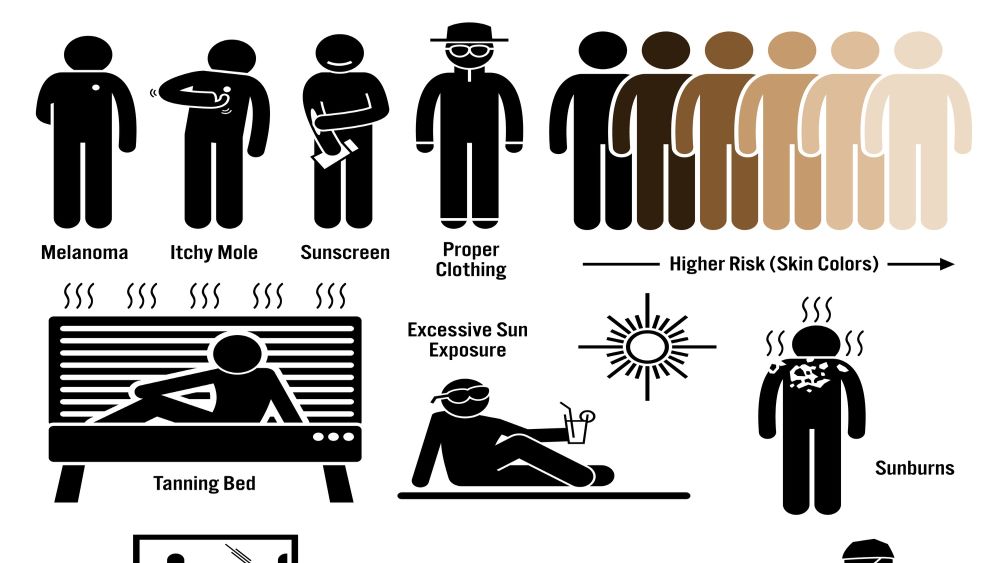
Unlike most common cancers, such as breast and lung cancer, the incidence of melanoma continues to increase, mainly in young people below the age of 30. There has been a more than 50 percent increase in melanoma in young women since 1980. The vast majority of melanomas are caused by exposure to UV light from sun or indoor tanning. Reducing these exposures by changing habits or using sun protection – sun screens and clothing coverage – is the best way to avoid melanoma and other skin cancers.
No, It's Not 'Just' Skin Cancer
Even though we now know better, there are still many who aren't doing better. The majority of Canadians recognize that skin cancer is dangerous -- yet we continue to see apathy around sun safety...
Should You Have a Scan for Skin Cancer?
Some doctors say individuals at high risk for skin cancer should have one head-to-toe exam a year.
the Impatient Patient
Notes on the journey I didn't plan to take... Motherhood, Melanoma, and making it to my Maserati.
A Cautionary Tale For Sun Lovers Everywhere
After my husband Olof’s four surgeries for in situ melanoma, the less serious form that hasn’t penetrated below the top layers of skin, and my surgery for malignant melanoma — the type that has — we asked our dermatologist where we’d ever be able to go on vacation again. She replied, “Oregon in the winter?”
A new blood test could detect early stage melanoma in more than 80% of patients
Hopefully in the not-too-distant future, when a suspicious lesion is identified in a patient, rather than having to undergo a biopsy, patients can just have a simple blood test.
Australian Researchers Believe They Can Stop Melanoma In Its Tracks
Not only is it the deadliest, but it's also the fourth most common cancer diagnosed in Australia.
Checking yourself for melanomas? You might not be looking for the right thing.
Skin cancer is easy to prevent as long as you know what to look for.
How Suntanning Both Increases And Reduces Your Chance Of Dying From Melanoma -- A Mystery Solved
Quick quiz question: two people are diagnosed with melanoma – Sarah Sunburn, an adamant sun-worshipper, and Paula Pale-All-The-Time, a fanatical sun-avoider. Who is more likely to die of the disease? The answer is pale-faced Paula. Surprised? Let me unpack this mystery and explain why sun exposure simultaneously kills people, while making the cancers they are diagnosed with appear to be less life-threatening.
Married People Less Likely to Die From Melanoma
Married people are more likely than the unmarried to get timely diagnosis and treatment for malignant skin cancer. Early detection of melanoma, the deadliest form of skin cancer, is essential to effective treatment. The five-year survival rate for stage 1 disease is more than 98 percent, but by stage 3, the rate declines to 62 percent.
New Hope for Melanoma Patients
A new study reinforces the potential of a new class of expensive immune-boosting drugs to prolong the lives of people with a deadly form of skin cancer.
New treatment extends life of advanced melanoma patients
This article is more than 4 years old New treatment extends life of advanced melanoma patients This article is more than 4 years old Half of people live five years or more with combination immunotherapy treatment, study finds Sarah Boseley Health editor Sat 28 Sep 2019 04.54 EDT Share Half of people diagnosed with advanced melanoma, which once had dismal survival rates, are now living for five years or more when they receive a combination immunotherapy treatment, a study has shown. A decade ago, only one in 20 patients were still alive after five years. Most died within six to nine months. Researchers from the Institute of Cancer Research and the Royal Marsden hospital in London, who have pioneered the work, said the five-year survival rate for just over half of their patients was a landmark.
Obesity Tied to Survival in Men With Melanoma
Compared with men of normal weight, obese men in treatment had nearly double the progression-free survival time and nearly double the overall survival time. The more overweight the man was, the greater the effect. But there was no association of obesity with survival in women.
People still aren’t wearing sunscreen and melanoma rates are rising
Globally, North America is the region with the second-highest instance of melanoma, trailing just Australia and New Zealand—though by a very significant margin.
Scientists Discover A Potential 'Off Switch' For Aggressive Melanomas
Melanoma accounts for only around 1% of skin cancers, but it’s by far the most deadly and has a reputation for quickly developing resistance to chemotherapy. Moreover, rates of melanoma have been increasing over the past few decades.
Sunscreens - Are They An Oxymoron?
It's everywhere and everybody does it…uses sunscreen, that is. But could sunscreens be causing more harm than good?
The State of Melanoma: Challenges and Opportunities
The field of melanoma—both research and clinical management—has exponentially expanded over the past decade and has become a paradigm for understanding cancer signaling, tumor immunology and their clinical application.
There’s no such thing as a safe tan. Here’s what’s happening underneath your summer glow
There’s a lot to be said for sunshine – both good and bad. It’s our main source of vitamin D, which is essential for bone and muscle health. Populations with higher levels of sun exposure also have better blood pressure and mood levels, and fewer autoimmune diseases such as multiple sclerosis. On the other hand, excess UV exposure is estimated to contribute to 95% of melanomas and 99% of non-melanoma skin cancers. These skin cancers account for a whopping 80% of all new cancers each year in Australia.
Understanding Melanoma: What You Need to Know
Despite the complexity, the authors have tried to explain the treatments and the genetics underlying the major progress in remission and recurrence resulting from the targeted therapies. Other consumer health books on melanoma have not attempted such comprehensive explanations. The authors are to be commended on this attempt.
Warning: That Tan Could Be Hazardous
Indoor tanning might seem like a fashion that faded with the 1980s, but it remains a persistent part of American adolescence, popular spring, summer and fall but especially in winter, when bodies are palest.
Why SPF doesn't really matter and other sunscreen facts
Sunscreen is one of the most popular forms of protection from the sun's damaging rays. But how and why it works is often met with confusion. Here's what you need to know...
Resources
10 skin cancer signs you should be aware of
Getting to know your skin is probably the single most important thing you can do to help detect skin cancer symptoms. Check your moles regularly and keep a record of things popping up or growing on your skin.
Melanoma Institute Australia
Melanoma Institute Australia is dedicated to preventing and curing melanoma through innovative, world-class research, treatment and education programs. Our mission is to reach zero deaths from melanoma this decade.
AIM at Melanoma
A melanoma diagnosis can lead to many unanswered questions. Aim for Answers makes finding the right information easier, by providing patients, caregivers and family members, with everything they need to know about melanoma.
Melanoma March
Melanoma March was established in 2012 by a Sydney businessman who lost his 18 year old son to melanoma. The inaugural Melanoma March, held in Manly, was a local event honouring the memory of those who had been lost to melanoma, while also providing an opportunity to raise vital funds and awareness. The event quickly grew, becoming a national initiative of Melanoma Institute Australia and the major annual fundraising campaign to support ongoing melanoma research.
Melanoma Research Alliance
Collaboration is at MRA's core–from the team approaches to research that we fund, to the way we find partners who can help us realize our vision. Our allies are also focused on increasing public knowledge about the seriousness of melanoma and ways to reduce risk and improve early detection.
#NotJustSkinCancer
It is important to understand that not all skin cancers are created equal. There are three different types of skin cancers with varying degrees of severity, and while most can be cured if found and treated early, those that spread beyond the surface of the skin can be complex and difficult to treat.
Children's Melanoma Prevention Foundation
The Children's Melanoma Prevention Foundation was created to educate school children on the proven methods of sun protection and skin cancer prevention.
Melanoma Education Foundation
The Melanoma Education Foundation is a non-profit organization devoted to saving lives from melanoma, a common skin cancer that is often deadly unless detected early before there are any symptoms.
Melanoma International Foundation
We provide hope and guidance to melanoma patients and families by empowering them with correct up-to-date information. We are on the cutting edge of creating and supporting the most effective melanoma programs for the prevention, early detection, and treatment of melanoma.
The American Melanoma Foundation
The American Melanoma Foundation is a voluntary health agency, registered as a 501(c)(3) charitable, non-profit organization. AMF is governed by a volunteer Board of Directors dedicated to serving the needs of patients and communities nationwide, and is a member of the National Council On Skin Cancer Prevention
American Cancer Society
Whether it's in our Overviews, Detailed Guides, or one of our other cancer documents, chances are you will find the information you need in this section.
MedicineNet
Three types of cancers account for virtually 100% of skin cancers. The nonmelanomatous skin cancers include basal cell carcinomaand squamous cell carcinoma. Malignant melanoma is the third, and most deadly, type of skin cancer.
Melanoma Research Foundation
The Melanoma Research Foundation (MRF) is the largest independent organization devoted to melanoma. Committed to the support of medical research in finding effective treatments and eventually a cure for melanoma, the MRF also educates patients and physicians about prevention, diagnosis and the treatment of melanoma.
National Cancer Institute
Information about melanoma treatment, including surgery, chemotherapy, radiation therapy, immunotherapy, and vaccine therapy.
Skin Care Foundation
Melanoma is the most serious form of skin cancer. However, if it is recognized and treated early, it is nearly 100 percent curable.