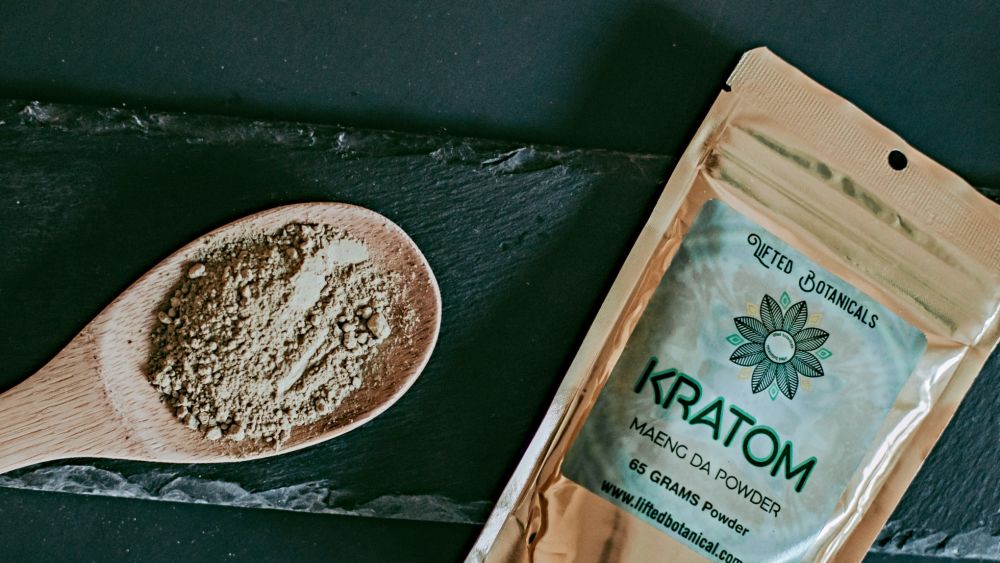
Kratom
No matter which side of the controversy you line yourself up with, no doubt you’ll find many who are both for you and “agin” you. Kind of reminiscent of about fifty years ago when the argument was about another herb - Shilo Zylbergold
.jpg)
image by: HWN
HWN Suggests
Kratom: What Is It and Is It Safe?
It’s packaged in pills, powders, liquids, and, rarely, in its original form as a plant leaf. Kratom—a substance derived from the Mitragyna speciosa plant, which grows in Southeast Asia—is gaining popularity and raising alarm, popping up on shelves in convenience stores and bodegas in the United States along with other substances known as “gas station drugs.” In small amounts, kratom acts as a stimulant, and is often marketed as an energy booster or a tool for managing anxiety. In higher doses, however, it has the opposite effect, acting as a sedative with opioid properties. Sometimes it is advertised as a painkiller. This dose-dependent shift—from a pick-me-up to a heavy sedative—can lead…
Featured
 Kratom 7-OH: What to Know About this Powerful Compound
You might have seen kratom products in a gas station, vitamin shop, or a “CBD Kratom” store. Kratom is a plant originally from Southeast Asia that has gained attention for its alleged ability to increase energy, relieve pain, and help with mental health, though it has not been approved for any medical use. Of even greater concern is a version called kratom 7-OH that’s much more serious and potentially dangerous. Let’s break down what it is, why it’s different from “normal” kratom, and why it’s important to be aware of it.
Kratom: Jekyll or Hyde?
What do you get when you cross extremely high-test coffee with sleeping pills? What has the U.S. Drug Enforcement Administration (DEA) been planning to ban because it represents an “imminent hazard to public safety”? What is Thailand considering for legalization because it is seen as a safer alternative for meth addicts?
Articles of Interest
Is Kratom Nature’s Answer to Opioids?
For centuries, people in Southeast Asian countries like Malaysia, Indonesia and Thailand have chewed kratom leaves or made tea from them to chill out, improve productivity during manual labor and tap their inner bliss during religious ceremonies. In the United States, kratom has largely been limited to High Times circles, though grass-roots groups like the American Kratom Association have emerged to combat recent attempts to make the leaf illegal.
Kratom: What You Need to Know About This “Natural” Opioid
Most users aren’t seeking a caffeine-like boost—they’re looking for the opioid-like effects to manage pain or avoid prescription opioids. As access to prescription opioids declined during the opioid epidemic, people turned to kratom as a legal, “natural” alternative. It’s easy to find in many states such as Utah—sold in vape shops, gas stations, and online. “You drive down the street and see a vape shop—you’ll probably see a sign in the window that says ‘Kratom sold here’ in fluorescent letters,” says Moss, an associate professor of medical toxicology at the Spencer Fox Eccles School of Medicine at the University of Utah.
Release the Kratom: Inside America's Hottest New Drug Culture
Many use kratom to quit opioids; others just want to get high. There's a push to regulate the plant-derived drug—but experts disagree on its safety.
Should Kratom Use Be Legal?
Thailand is considering legalizing kratom as a safer alternative for meth addicts, and U.S. researchers are studying its potential to help opiate abusers kick the habit without withdrawal side effects. Is that a good thing?
The dangers and potential of ‘natural’ opioid kratom
Given the opioid addiction crisis, it would seem preposterous that an opioid is legal for use in the United States and can be purchased at tea stores, convenience stores, over the internet and, yes, even from vending machines. However, kratom is not your average opioid. The Drug Enforcement Agency found this out when it tried to ban the herb in 2016. Public outcry from users and 51 congressmen around the country from both political parties was loud. The DEA has since dropped its attempt to ban kratom, although its use is banned in Alabama, Arkansas, Indiana, Tennessee, Vermont, Wisconsin and Louisiana. More recently, on Nov. 14, 2017, the FDA issued a public warning about kratom, citing 36 deaths that the agency has attributed to kratom use.
The Unregulated Rise of Kratom Drinks: Emerging Challenges and Policy Recommendations
The opioid epidemic left the US health system with devastating questions. How did a profit-driven pharmaceutical company fuel a crisis that claimed hundreds of thousands of lives? One answer lies in the unchecked influence of commercial interests on product marketing and regulation, a failure that enabled the rise of OxyContin and, more recently, Juul. Given the immense harm caused by these products, it is critical to monitor emerging industries whose products carry a risk of addiction for similar warning signs. We identify kratom drinks as one such product, arguing that lax regulation, aggressive marketing, and consumer confusion make them a looming public health threat.
Why regulators want to ban a key ingredient in kratom, a popular herbal supplement
Southeast Asians have used kratom leaves as a home remedy for centuries. Recently, its popularity in the U.S. has exploded as a way to ease the effects of opioid withdrawal. But kratom is poorly regulated and synthetic versions contain high levels of a powerful compound that officials say should be restricted.
Banning kratom won’t stop users or solve the drugs health crisis – so why continue this losing war?
Some kratom users claim that preparations can be used to treat opiate addictions. But data to support its effectiveness and safety is scarce, especially considering that these claims have been made on anecdotal evidence and have not followed the usual rigorous scientific procedures.
Can the kratom plant help fix the opioid crisis?
Vinson felt stigmatized for asking for help and decided she would take matters into her own hands: She stopped taking the pills. But not only did the pain come back even stronger, the withdrawal symptoms weren't manageable. She began researching natural remedies to treat pain and came across kratom.
FDA Weaponizes 'Opioid' Label Against Kratom Consumers
As a result, kratom sits in the regulatory no-man's land of botanical medicines as foods. As long as no direct disease treatment claims are made, retailers can sell all manner or herbal products unless they are proven unsafe by the FDA. It seems that the latest announcement by the agency is an attempt to move in that direction, with the potential goal of prohibiting sales of kratom in the U.S. The herb is already subject to import seizures, and a domestic U.S. cultivation industry, like that for herbs such as echinacea and turmeric, has yet to emerge.
HHS recommended that the DEA make kratom a Schedule I drug, like LSD or heroin
The Department of Health and Human Services has recommended a ban on the chemicals in kratom that would make the popular herbal supplement as illegal as heroin or LSD, according to documents obtained by STAT.
Is Kratom the New "Bath Salts" or Just an Organic Pain Reliever with Euphoric Effects?
But, have you heard of the latest legal drug craze to hit a gas station near you? It’s called Kratom, and unlike bath salts, Spice or any of the synthetic, formerly ”legal” drugs on the DEA hit list, this one is entirely organic, and so far not listed as a controlled substance.
Kava vs Kratom: The Important Differences You Need to Know
Kava and Kratom are increasingly being sold alongside each other at kava bars and in stores online. While they maybe similar in name and drink appearance, truth is, they are worlds apart.
Kratom Advocates Speak Out Against Proposed Government Ban
The main chemical is mitragynine. It binds to some of the same receptors as opioids, providing some pain relief and feelings of euphoria, but, Kroll says, not the same high. And the chemical doesn't cause the same, sometimes deadly, side effects as opioids, such as respiratory depression.
Kratom is the safe alternative to opiates we need, and there is a conspiracy to ban it.
Even today, Kratom may be a safer alternative to other manufactured “maintenance” solutions like methadone and suboxone. I’m unwilling to criticize either of these substances because it’s factual that they save lives. However, each has their own particular baggage and price tag. For one thing, they’re both opiates and cause respiratory depression. Also, the barrier for entry is quite high. Meaning, people are unwilling to admit their addiction in the early stages, and thus these drugs are often prescribed much later into the development of the disease.
Mitragyna speciosa: Balancing Potential Medical Benefits and Abuse
Mitragyna speciosa, also known as kratom, has the potential meet the need for pain medications that lack the addictiveness and overdose risk of classical opioid analgesics, such as morphine. This need is urgent because opioid addiction and overdose deaths have risen throughout diverse segments of U.S. society.
My Three Months on Kratom, the 'Miracle Drug' for Bodybuilders and Opiate Addicts
I first caught wind of kratom back in 2016, when filmmaker Chris Bell told me at that year’s Olympia Fitness and Performance Expo in Las Vegas how he was making a documentary entitled A Leaf of Faith. It was about the life-changing impact of kratom, or as it’s known in scientific circles, mitragyna speciosa, a plant that when ingested can apparently do everything from helping you kick an addiction to opioids to keeping you awake and attentive for hours on end.
Recreational Drug Kratom Hits the Same Brain Receptors as Strong Opioids
For recreational drug users looking for an opioidlike high without the legal problems of heroin, fentanyl, and oxycodone, the Southeast Asian plant called kratom (Mitragyna speciosa) has provided an attractive alternative. But, acting on anecdotal reports of people becoming dependent on kratom, six states, including Vermont and Indiana, have banned the sale and use of the herb.
Some Say Kratom Is A Solution To Opioid Addiction. Not If Drug Warriors Ban It First
Prohibition is a short-sighted, ineffective policy, but that’s not standing in their way.
The Benefits Of Kratom, And Risks Of Kratom Extracts, From The People Who Use The Botanical Medicine
I'm not saying that kratom is without risks, and I will also include a few stories from people who've had negative experiences with the herb, all of which involve the use of concentrated kratom extracts, not the bulk powder that most commenters and correspondents seem to be using. But the combination of recently published basic science studies and user reports tells me that kratom is certainly worth further systematic study as an alternative to strong prescription opioids and in recovery from alcohol and substance dependence.
The FDA Concludes That Kratom Is An Opioid, And...
Although I am in agreement with the FDA's science, it does not exist in a vacuum. When determining the risk of using a drug or chemical it is essential to also consider the risk of not using it. This is why I "changed my mind" about kratom. Kratom did not change, but the situation did. The risk of not having kratom available, despite all its liabilities, may be greater than whatever harm the drug may cause.
The U.S. May Ban Kratom. But Are its Effects Deadly or Lifesaving?
Across America, thousands of people are throwing away their prescription drugs and picking up kratom, a plant-based drug from Southeast Asia usually brewed as a tea. Within the leaves of this tropical tree are opioid-like compounds that users say provide pain and anxiety relief, and the ability to wean off street drugs like heroin. But some health organizations warn kratom can be addictive itself or even deadly. An estimated five million people use kratom regularly, according to the American Kratom Association (AKA), a pro-kratom lobbyist group. And the rising popularity of this herb has caught the eyes of federal government regulators, who have made several unsuccessful attempts to ban it. But that may soon change.
What is Kratom and Why is It Raising Concerns?
Kratom is a leafy plant native to southeast Asia, that has found popularity in the United States due its psychoactive properties. Its leaves can be prepared and consumed as a tea, capsule, tonic, or pressed tablet. Recently, concentrated preparations of opioids that are naturally produced by kratom have become commercially available, prompting concern from the medical community, FDA, and DEA, due to their potential for dependence and addiction.
Why banning the opiate-like plant kratom might do more harm than good
Classifying kratom as a Schedule I drug may hinder medical research.
Resources
American Kratom Association
The American Kratom Association was formed to organize and represent a community of responsible consumers, provide the general public with clarification surrounding matters of health and wellness where Kratom could play an important role, educate lawmakers and regulators and support scientific research efforts.
The Kratom Files
Kratom is a tree native to southeast Asia. The leaves of the plant have been used for centuries to treat a variety of conditions. The media and law enforcement agencies often portray kratom in a negative light. The aim of this blog is address some of that negative attention, and to provide additional information that readers can use to form an educated opinion.
#iamkratom
If you search #IAmKratom on social media you will see hundreds of people that use this natural plant as an alternative to synthetic pharmaceuticals. In every way, it’s a preferable option to real opiates for pain management. It’s not nearly as addictive, it’s cheaper, it’s natural and does not cause a “high” or put the person into an opiate stupor - Mason Balistreri
Kratom Bible
I have created this website to inform people on the benefits of the leaf known as kratom. I blog about all my experiences with the recommended vendor strain.
National Institute on Drug Abuse
Kratom is a tropical tree (Mitragyna speciosa) native to Southeast Asia, with leaves that contain compounds that can have psychotropic (mind-altering) effects. Kratom is not currently an illegal substance and has been easy to order on the internet. It is sometimes sold as a green powder in packets labeled "not for human consumption." It is also sometimes sold as an extract or gum.