UV Radiation
Even amid the misconceptions and unreliability, possibly the biggest downside to SPF is that it only refers to UV-B rays - James Hamblin

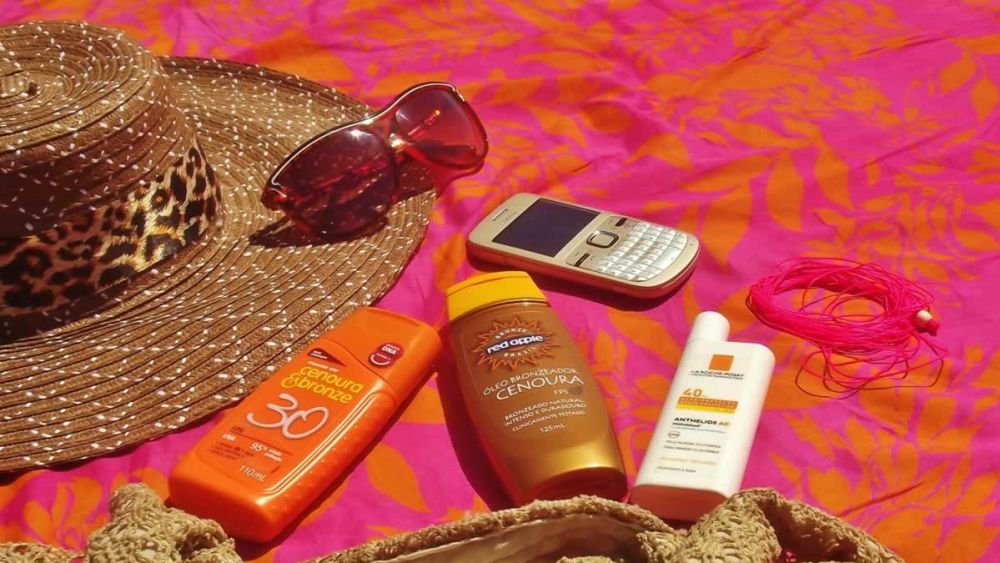
image by: Dreaming of the Sea
HWN Suggests
UV radiation: the risks and benefits of a healthy glow
Eighty years ago, when sun exposure was first associated with skin cancer, popular culture was exalting tanning by emphasizing that a “fine brown color suggests health and good times, and is a pleasant thing to see.”
We know that sun exposure can be deadly, and today’s public awareness campaigns strongly focus on sun avoidance to prevent skin cancer. But we also know that sunlight is important to our health and plays a role in many biological processes in our bodies.
In fact, some physicians and scientists are taking a closer look at sunlight to expose the lesser known benefits of ultraviolet (UV) light.
What is UV light?
When we are…
Featured
 Coronavirus Sparks New Interest In Using Ultraviolet Light To Disinfect Indoor Air
Research already shows that germicidal UV can effectively inactivate airborne microbes that transmit measles, tuberculosis and SARS-CoV-1, a close relative of the novel coronavirus.
How to dress to protect yourself from UV rays
Applying sunscreen is only the first step.
Wearables can track your UV exposure, but preventing skin cancer isn’t so simple
Scientists still haven't figured out what a safe level of sun exposure is.
When do I get the most UV light?
When the sun is directly overhead, which only ever occurs in the tropics, sunlight has its shortest journey through the atmosphere. When the sun is lower in the sky, more ultraviolet light is attenuated because the sunlight has a longer journey through the air. That means your body will get most UV at midday, when the sun is highest in the sky. Of course, it depends where you are on the planet, as UV increases when you are closer to the equator.
Articles of Interest
L’Oréal’s New Clip-on Sensor Tracks Your Exposure to UV Rays
THE FUTURE OF wearable skincare technology is roughly the size of an M&M. Launching today, L'Oréal’s La Roche-Posay My Skin Track UV sensor clips onto clothing and measures the wearer’s exposure to UV radiation, a form of radiation that is known to damage skin and, in large amounts, cause skin cancer.
Scientists Devise Cheap, Wearable UV Detector to Help Prevent Sunburn
Sunshine on a biting fall day can feel blissful. But too much time spent basking in the sun’s ultraviolet rays can lead to sunburn and increase the risk of developing skin cancer, cataracts and wrinkles. Now, researchers have made a cheap, wearable device that keeps tabs on UV exposure. The new tech could mean soaking up the sun without overdosing on radiation.
How SPF Ratings Can Do More Harm Than Good
Even amid the misconceptions and unreliability, possibly the biggest downside to SPF is that it only refers to UV-B rays. It does not address UV-A rays, which are also carcinogenic. To make sure that you’re protected from UV-A, you have to use a sunscreen that’s labeled “broad spectrum.” For UV-A, there is no SPF system, only this binary indicator of presence or absence.
How Sunlight Weakens Your Skin
A sunny day at the beach has plusses and minuses for your health. A little bit of sun can help your body produce vitamin D, but the sun's ultraviolet radiation raises your risk for skin cancer. And, it turns out, UV radiation poses another threat — it physically weakens your skin.
Information on UV Radiation
Exposing your skin to ultraviolet radiation stimulates melanin-producing cells. With increasing amounts of melanin you skin darkens. This tanning provides a protection against UV radiation damage.
Is Sunlight Actually the Best Disinfectant?
If you’re trying to disinfect anything other than water, however, sunlight isn’t the wisest option, as it’s is most effective against water-borne pathogens. For example, if you try to disinfect your cellphone (studies have shown it’s probably dirtier than your toilet seat), sticking it in the sun for an afternoon won’t do the trick, because there isn’t enough ultraviolet light in the sun’s rays (at least within the Earth’s atmosphere; the ozone layer blocks the majority of powerful UV radiation).
Rays of hope: light therapy through the ages
It was an arresting image: Four children, wearing black masks to protect their eyes, sitting in front of large lamps. The caption placed them at London’s Institute of Ray Therapy, which opened in 1930. The old photo got us thinking about light therapy, then and now. A hundred years ago, it was all the rage...
Scientists have found yet another reason for you to get some sun this winter
Researchers from Georgetown University Medical Center found blue light—light with a short wavelength that comes from both the sun and, for example, the lit-up screens of devices like smartphones—helps circulate a type of immune cells in our skin. When these cells, called T-cells, flow around the body more effectively, they’re able to reach new infections more quickly, and stop them before they actually cause harm.
Sunbeds and UV Radiation
In addition to natural sunlight, sunbed users seeking to achieve a tan expose themselves to substantial amounts of artificial UV radiation.
Sunscreens - Are They An Oxymoron?
It's everywhere and everybody does it…uses sunscreen, that is. But could sunscreens be causing more harm than good?
Tanning and its Effects on Your Health
The most up-to-date scientific evidence shows there is no such thing as a safe or healthy tan, whether under the sun or in a tanning bed. It is important to take steps to avoid overexposure to ultraviolet radiation. Exposure to ultraviolet A and B radiation can cause sunburn, damage to your eyes and other health effects, including an increased risk of skin cancer.
The known health effects of UV
UV radiation has been used to successfully treat a number of diseases, including rickets, psoriasis, eczema and jaundice. This therapeutic use cannot eliminate the negative side-effects of UV radiation but treatment takes place under medical supervision to ensure that the benefits outweigh the risks.
Ultraviolet Radiation: How it Affects Life on Earth
UV radiation from the sun has always played important roles in our environment, and affects nearly all living organisms. Biological actions of many kinds have evolved to deal with it. Yet UV radiation at different wavelengths differs in its effects, and we have to live with the harmful effects as well as the helpful ones.
With Summer Sun Come Signs of Danger
Dr. Brash said skin on the hands, arms, cheeks and ears is likely to be even more heavily exposed to UV radiation than eyelid skin, and thus may have even higher levels of mutations, since the eyelids are shaded in part by the eye socket and sometimes sunglasses.
Resources
UV-B Monitoring and Research Program
The program was initiated in 1992, through a grant to Colorado State University, to provide information on the geographical distribution and temporal trends of UVB (ultraviolet -B) radiation in the United States.
SunSmart
SunSmart's aim is to lead, coordinate, implement and evaluate action to minimise the human cost of skin cancer in Victoria.
Canadian Centre for Occupational Health and Safety
Ultraviolet (UV) radiation is similar to visible light in all physical aspects, except that it does not enable us to see things. The light that enables us to see things is referred to as visible light and is composed of the colors we see in a rainbow.
EPA
The sun radiates energy over a broad spectrum of wavelengths. Ultraviolet radiation, which has a shorter wavelength than either visible blue or violet light, is responsible for sunburn and other adverse health effects.
Health Physics Society
The sun is our primary natural source of UV radiation. Artificial sources include tanning booths, black lights, curing lamps, germicidal lamps, & mercury vapor lamps.
WHO
Small amounts of UV are essential for the production of vitamin D in people, yet overexposure may result in acute and chronic health effects on the skin, eye and immune system.