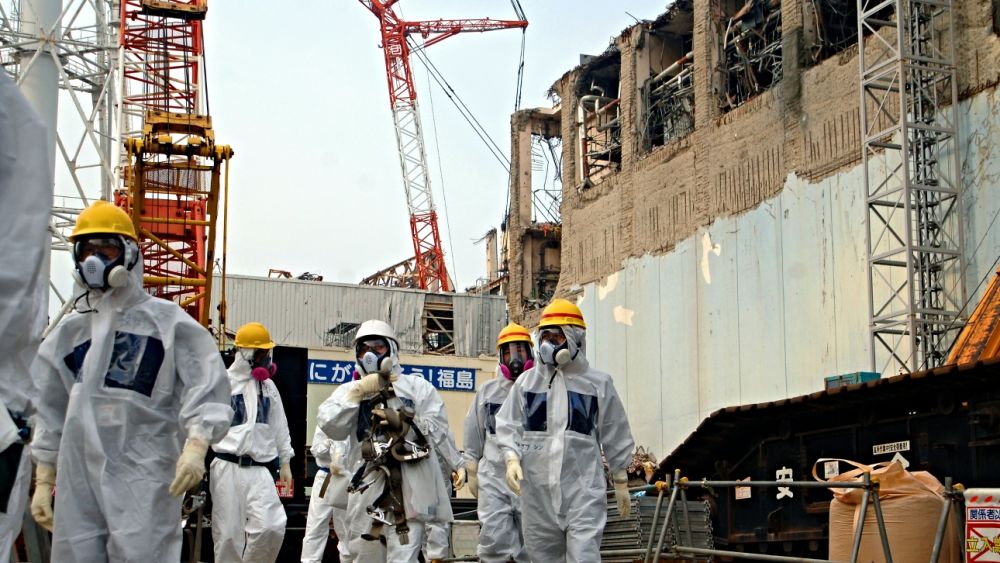
Nuclear Fallout
There are two problems for our species' survival - nuclear war and environmental catastrophe - and we're hurtling towards them. Knowingly - Noam Chomsky

image by: ₡ґǘșϯγ Ɗᶏ Ⱪᶅṏⱳդ
HWN Suggests
How to Survive Nuclear Fallout
It happened. Bright, white light flashed before your eyes, the power of the sun licked your skin, and you felt a shock wave of dust and debris plow through the city you call home. You’re one of the lucky ones, for now, but your struggle isn’t over yet—not even close.
What Is Nuclear Fallout?
After a nuclear bomb is detonated, residual radioactive material is propelled into the upper atmosphere. That material, usually comprised of radioactive dust and ash, then “falls out” of the sky—hence the name. The material can travel for hundreds of miles along natural wind patterns. Exposure to any type of fallout, be it debris, dust, ash, radioactive rain, or anything…
Featured
 The World's Glaciers Are Sponging Up Loads of Nuclear Fallout, But You Shouldn't Worry — Yet
The world's ice is rapidly disappearing, but not without a trace. Ancient artifacts, frozen corpses, long-dead viruses and loads of trapped greenhouse gases are the parting gifts left behind as Earth's melting glaciers and permafrost retreat. And now, thanks to ongoing global research, a new (and concerning) item can be added to that list: nuclear fallout.
Communities in the American Southwest Were Exposed to Nuclear Fallout. Can They Get Compensated?
The atomic bomb was born in the desert. In the early hours of July 16, 1945, after a spate of bad weather, a 20-kiloton plutonium-based nuke referred to as “the gadget” detonated near Alamogordo, New Mexico. The bomb produced a massive cloud column that drifted in several directions, dusting large swaths of the surrounding region with radioactive snow—fallout that settled on buildings, plants, and animals, and that continued to permeate the air as invisible particulate in the weeks and months that followed. Five years later, the Nevada Test Site was established to continue the work that Trinity set alight.
Fukushima: “An Ongoing Global Radiological Catastrophe”. “A Huge Coverup”. Dr. Helen Caldicott
What people need to understand is the latent period of carcinogenesis, ie the time after exposure to radiation when cancers develop is any time from 3 years to 80 years. And so it’s a very, very long period. Thyroid cancers appear early. Leukemia appears about 5 to 10 years later. They’re not looking for leukemia. Solid cancers of every organ, or any organ as such appear about 15 years later and continue and in fact the Hibakusha from the Hiroshima and Nagasaki who are still alive are still developing cancers in higher than normal numbers. The Japanese government has told doctors that they are not to talk to their patients about radiation and illnesses derived thereof, and in fact if the doctors do do that, they might lose their funding from the government.
I Lived in Chernobyl to See if Nuclear Fallout Makes Fungus Grow Better
It helped me to redefine Chernobyl as healthy. Not thriving, but a place with a community.
The Nuclear Fallout They Kept Secret
Kodak detected the first atomic bomb before anyone else figured it out. Then they made a deal not to tell anyone. Thanks to HBO Max, and their new show raised by Wolves for sponsoring this video!
Articles of Interest
Where to Hide If a Nuclear Bomb Goes Off In Your Area
This is advice I hope you never need but should know anyway. A nuclear attack is everybody’s worst nightmare, and the immediate aftermath is just as bad, if not worse, than the explosion itself. Here’s what you should do if you survive the initial blast.
After Japan Crisis, New Urgency for Radiation Drugs
The crisis has put a spotlight on some small biotechnology companies developing drugs to treat people exposed to radiation. Some say they are accelerating their efforts in light of the problems in Japan.
Can you survive nuclear fallout?
Can we survive a nuclear fallout? Taking the right precautions sure we could. But as once said by Vsauce3 the real question is would we want to survive a nuclear fallout.
Chernobyl: 33 Years On, Radioactive Fallout Still Impacts Scandinavian Farmers
The smash-hit HBO series Chernobyl has introduced an entire new generation to the nuclear disaster that shook the world in 1986. Initially covered up by Soviet authorities, the disaster only came to light when nuclear power stations in Sweden—hundreds of miles away—detected high levels of radiation and began to ask questions. 33 years later, radiation remains a problem in both Sweden and Norway, especially for farmers.
Fukushima Fallout: It's No Chernobyl, We Hope!
Time will tell how the long term effects of Fukushima will ‘fall out’. The stark reality is what occurred in Japan could happen anywhere! So, be ready for the next one.
If a nuclear bomb explodes nearby, here's why you should never, ever get in a car
Your best shot at survival after a nuclear disaster is to get into some sort of "robust structure" as quickly as possible and stay there, Buddemeier said. He's a fan of the mantra "go in, stay in, tune in."
Let Them Drink Milk
The failure to provide adequate warning of the dangers of fallout should not be compounded by a failure to release full information to the millions affected by iodine-131 fallout from atmospheric nuclear testing.
Mysterious 2017 cloud of radiation over Europe came from Russia, new research says
New international research has suggested that an enormous radioactive cloud that covered part of Europe in 2017 was produced by a nuclear fuel reprocessing accident at Russia’s Mayak Production Association, despite repeated denials from Moscow that the facility bears any blame.
Natural Ways to Mitigate Radiation Damage
Since the dramatic nuclear meltdowns in Japan in March of 2011, much has been said about radiation and radioactive contamination. Our government can’t seem to make up its mind, depending entirely on which agency is doing the talking today. We have the bloated security apparatus issuing dire propaganda about “dirty bombs” made with maybe a pound of radioactive material, which we are supposed to be so terrified of that we will tolerate the blanket abrogation of our rights and liberties. At the very same time we get glib assurances that nuclear power plant meltdowns and explosions involving hundreds or thousands of tons’ worth of highly radioactive material are “nothing to worry about.” Because both these positions cannot be true at the same time, we get to choose which we will believe. Most of us will choose to err on the side of caution, given the accumulated documentation of serious health effects radiation and radioactive contamination can cause.
Nuclear fallout: the mental health consequences of radiation
Radiation protection research has been focused upon the bodily effects of exposure to ionising radiation, rather than upon the psychology of survivors. However, recent work, including my own, has shown that the most significant impacts of radiation emergencies are often in our minds.
The rise and fall of the American fallout shelter
What happened to this piece of Cold War arcana? And would it have worked?
Thinking the unthinkable: Don’t rely on these historic fallout shelters in case of a nuclear attack
The best thing to do if caught in a nuclear attack is to stay inside, preferably in a building made of brick or concrete. Schlegelmilch recommends going as far below ground as possible or taking shelter in the center of a tall building.
Treatment of Radiation Exposure and Contamination
Some medical treatments are available for limiting or removing internal contamination depending on the type of radioactive material involved. These treatments include the following: Potassium iodide (KI), Prussian blue, DTPA (Diethylenetriamine pentaacetate).
Resources
3 Medicines That Could Save Your Life Following a Nuclear Blast
It is always better to prevent exposure to radioactive materials and fallout than to have to deal with the health effects of radiation exposure... In this post, we will discuss three of the more common medicines available in the event of a nuclear blast. Whether the drug is over the counter or prescription, it is highly advised to only take as directed by health officials and in the proper amount. Even OTC meds have serious side effects if not taken as directed. The three we will discuss are: Potassium iodide, Prussian Blue and EDTA.