Breast Cancer Screening
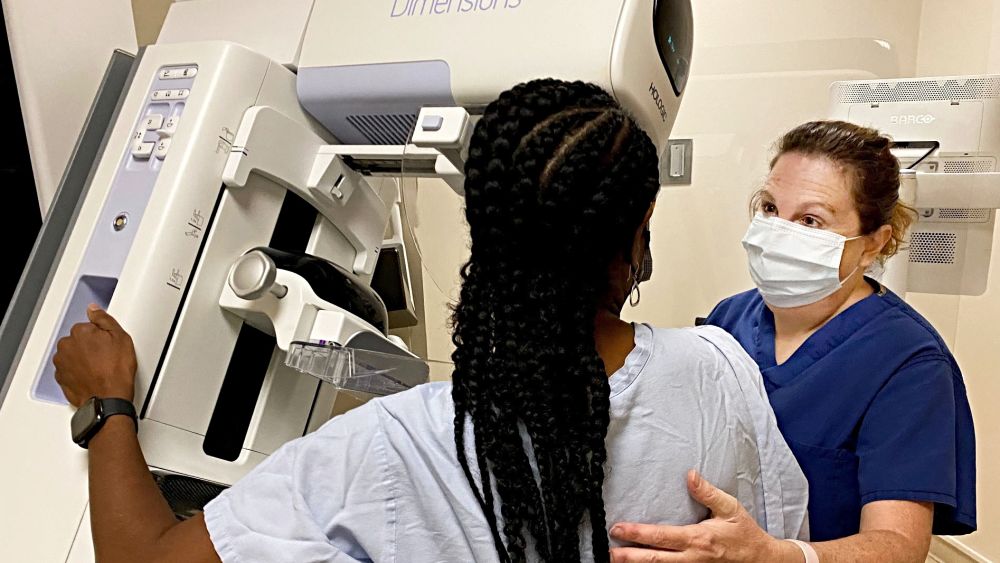
Women with no known family history or obvious risk factors are getting breast cancer—and young. Exciting new risk-forecasting tools make it possible to identify them sooner, and potentially even prevent a diagnosis in the first place - Erica Sloan

image by: HWN
HWN Suggests
Screening for Breast Cancer: What You Need to Know
Significant controversy surrounds current recommendations for breast cancer screening. This has resulted in wide variation among national organizations in breast cancer screening guidelines. With the expanding field of breast imaging techniques, risk assessment and genetic testing, it has become clear that the recommendations for breast cancer screening need to be individualized in order to maximize the benefit and minimize harms of screening.Featured
 Breast Cancer: Screening April 30, 2024
The Task Force now recommends that all women get screened every other year starting at age 40. This final recommendation also urgently calls for research in key areas.
Do increased breast cancer screenings save lives? Doctors can't agree.
Breast cancer is a well-funded field of research, yet guidelines regarding additions to mammograms for women with dense breast tissue are a confusing mess. Many gynecologists routinely prescribe supplemental ultrasound or MRI along with mammography in women with a dense-breast diagnosis. The task force’s new “insufficient evidence,” or “I,” rating does not mean that no women will benefit from the supplemental screening.
The Evolving Landscape of Breast Cancer Screening
While mammography remains the gold standard, newer imaging technologies are enhancing detection. The U.S. Food and Drug Administration recently approved the first tool to predict five-year breast cancer risk from routine mammograms. Contrast-enhanced mammography and abbreviated MRI are also proving effective, especially for women with dense breast tissue or other high-risk factors. Individualized risk assessment for every patient allows healthcare providers to better tailor screening recommendations to the individual, helping to ensure early detection and improved outcomes for all women.
The New Era of Breast Cancer Screening
Women with no known family history or obvious risk factors are getting breast cancer—and young. Exciting new risk-forecasting tools make it possible to identify them sooner, and potentially even prevent a diagnosis in the first place.
Articles of Interest
Breast cancer screening is ripe for change. We need to assess a woman’s risk – not just her age
We’re not alone in calling for a move towards risk-based breast cancer screening. This is backed by national and international submissions to government, policy briefing documents and the Breast Cancer Network Australia. We’ve provided an evidence-based roadmap towards better screening for breast cancer. Now is the time to commit to this journey.
Risk-Based Screening Works as Well as Yearly Checks After 40 in Finding Breast Cancers
A study of more than 45,000 women found that screening women according to their level of risk was as effective in detecting tumors as the one-size-fits-most screening currently recommended.
Women Can Now Assess Their Breast Cancer Risk With the Help of A.I.
Clairity Breast, an A.I. tool that can predict five-year risk of developing breast cancer, is rolling out nationwide. Here’s what experts want you to know.
Your Five Breast Cancer Screening Tools
Put your hand up if the thought of being screened for breast cancer never crossed your mind until you or your doctor found a lump in your breast or armpit? I’m literally holding my left arm up in the air right now, as I type this. Crazy isn’t it, that we don’t think to have the girls checked to make sure they’re healthy until something goes wrong or until someone we know has been diagnosed with breast cancer.
A guide to breast cancer screening
Knowing how your breasts usually look and feel is important because changes to your breasts, such as new lumps, dimpling of the skin around your breasts, and unusual nipple discharge or bleeding can be cause for concern. Dr. Tiffany Onger of the Cleveland Clinic recommends feeling your breast tissue at least once a month for any changes. She recommends feeling them standing up, lying on your back and your side, and looking at them in the mirror. The National Breast Cancer Foundation, Inc., has a guide on how to conduct a breast examination at home.
A New Tool Could Help Detect Breast Cancer Earlier
Dotplot gives users real-time feedback and builds a personalized map of their chests.
About 80% of breast cancer biopsies turn out benign – new imaging tool promises clearer diagnoses and fewer biopsies
Diffuse optical tomography, or DOT, is an imaging technology that uses near-infrared light to measure total blood hemoglobin concentration and oxygen levels – key indicators of tumor activity – in the breast lump. It does not require patients to be injected with contrast dyes to make the image clearer. My team and I found that combining ultrasound with DOT can improve the accuracy of breast cancer diagnoses and reduce unnecessary breast biopsies.
AI use in breast cancer screening cuts rate of later diagnosis by 12%, study finds
The use of artificial intelligence in breast cancer screening reduces the rate of a cancer diagnosis by 12% in subsequent years and leads to a higher rate of early detection, according to the first trial of its kind. Researchers said the study was the largest to date looking at AI use in cancer screening. It involved 100,000 women in Sweden who were part of mammography screening and were randomly assigned to either AI-supported screening or to a standard reading by two radiologists between April 2021 and December 2022.
Are Mammograms Enough?
Here, experts explain why mammograms sometimes fall short for younger women and what options are available.
Australian women are wary of AI being used in breast cancer screening – new research
In recent years, scientists have developed AI algorithms that can analyse mammograms for signs of breast cancer. These algorithms may be as good as or better at finding cancers than human radiologists, and save the health-care system money. At the same time, evidence for the accuracy of AI in breast cancer screening is still emerging. And we need to ensure the benefits would outweigh the risks, such as overdiagnosis. This is where small cancers are detected that wouldn’t cause harm, resulting in unnecessary treatment.
Breast Cancer Screening Should Start at 40—Not 50—According to New Mammogram Guidelines
The change in guidelines, which lowered the recommended starting age for biyearly mammograms from 50 to 40, stems from a rise in breast cancer in women in their 40s.
Diagnosed with 'dense breasts'? You may need more than a mammogram
About 40% of women fall into the categories ranging from dense to extremely dense breasts — putting them at higher risk of developing cancer, which is also harder to detect on 2D or even newer 3D mammograms.
From Scan to Treatment Plan, AI Helps Close Breast Cancer’s Deadliest Gaps
Innovators are applying AI to each stage of the breast cancer care journey — imaging, risk assessment and treatment decisions.
It's Time to Torture the TaTa's Again!
Significant progress has been made in the fight against breast cancer, yet it’s still one of the most frequently diagnosed cancers for women. When caught and treated early, there is a 96% survival rate so - No More Excuses! Get your pink on, grab a friend, get a mammogram and go volunteer somewhere!
Know Your Screening Options
Your screening should be based on your unique combination of risk factors. The following section explains what options you may have depending on your risk factors. It is important to remember that none of these screening options should replace a mammogram.
When Should You Get a Mammogram? 10 Years Sooner Than You Think
The new recommendation is based on additional evidence that has emerged since 2016, says Dr. John Wong, vice chair of USPSTF. According to data from the National Cancer Institute, the rates of breast cancer for women in their 40s began increasing by 2% annually in 2015, and that trend justified a change in the recommendations to start screening a decade earlier. “Our current data shows that this recommendation could potentially save as many as one out of five women who would otherwise die if they waited to be screened until they were 50,” says Wong. “That’s potentially saving 25,000 women from dying of breast cancer. We think that’s a big win.”
When should you get screened for breast cancer—and how often?
But even as researchers like Dagdeviren continue to develop the screening tools of the future, O’Connell says that simply knowing your own body and paying attention to changes remains one of the most important strategies in detecting cancer. “Just be aware of what's normal for you and then you can tell if something changes,” she says.
Why Early Detection Matters: 7 Things to Know About Breast Cancer Screening
Mammograms can detect signs of breast cancer before symptoms appear, when the disease may still be confined to the breast and more treatment options may be available. But screening is not perfect, and an abnormal mammogram does not always mean cancer.
Resources
CDC
The Task Force recommends that women who are 40 to 74 years old and are at average risk for breast cancer get a mammogram every 2 years. Women should weigh the benefits and risks of screening tests (see below). Different screening recommendations may be used for women at higher than average risk.